
There is a part of your mind that decided your opinion of yourself before you were old enough to have an opinion about anything. It is running right now, behind every thought you are consciously having, making decisions you believe are your own, filtering what you notice, and reinforcing patterns you did not choose. Scientists estimate it drives somewhere between 90 and 95 percent of all human behavior. Most people have never once examined it directly.
That is the subconscious mind, and understanding it is the single most important thing you can do if you want to change anything real in your life. I teach this to every student who comes to my Reiki practice, from complete beginners to seasoned healers, because without this foundation, none of the deeper work makes sense.
The subconscious mind is not a mystical concept. It has a documented history in psychology and neuroscience stretching back more than 130 years. It has been studied through brain imaging, behavioral research, hypnosis, and clinical psychology. And it has been described, with remarkable consistency, by spiritual traditions across every major culture for millennia before any of that research existed. This article gives you the complete picture: what the subconscious mind is, where the concept came from, what neuroscience now tells us about it, how it shapes your reality in ways you cannot see, and what you can actually do to work with it rather than against it.
Table of Contents
What Is the Subconscious Mind: The Clear Definition
The subconscious mind refers to the part of mental processing that occurs outside of conscious awareness but continuously influences thoughts, emotions, decisions, behaviors, and physical responses. It is not a separate physical structure in the brain. It is a functional description of how the brain operates when it is running established programs, habits, beliefs, and automatic responses without requiring the conscious mind’s active involvement.
Think of it this way. When you learned to drive a car, every action required intense conscious attention. Checking mirrors, pressing the clutch, timing the gear shift, keeping the correct distance, reading road signs all simultaneously. After enough repetition, those actions transferred to automatic processing. Now you drive familiar routes with the conscious mind occupied by completely different thoughts. The driving is being handled by subconscious programming. That transfer from conscious to automatic is the subconscious mind at work, and it happens with every repeated experience, belief, emotional response, and behavioral pattern in your life.
Who Discovered the Subconscious Mind: The Real History
Most people attribute the subconscious mind to Sigmund Freud. The actual history is more interesting, and the person most responsible for giving us the word is someone most people have never heard of.
Pierre Janet: The Forgotten Founder

The term “subconscious” was formally coined in its modern psychological sense by French psychologist Pierre Janet in 1889, in his doctoral thesis De l’Automatisme Psychologique (On Psychological Automatism). Janet argued, based on his clinical research with patients experiencing dissociation and hysteria, that beneath the conscious thinking mind lay a powerful layer of awareness and processing that he called the subconscient. He believed this layer operated independently of conscious control and was responsible for automatic psychological and behavioral responses.
Janet is one of the most significant and least celebrated figures in the history of psychology. Carl Jung studied directly under him in 1902 and derived his concept of psychological complexes largely from Janet’s framework. Alfred Adler also acknowledged drawing his concept of the inferiority complex from Janet’s work. Sigmund Freud’s relationship with Janet’s ideas was more complicated. Janet accused Freud of having appropriated substantial portions of his research without attribution, a dispute that has never been fully resolved in the historical record.
Sigmund Freud and the Iceberg Model
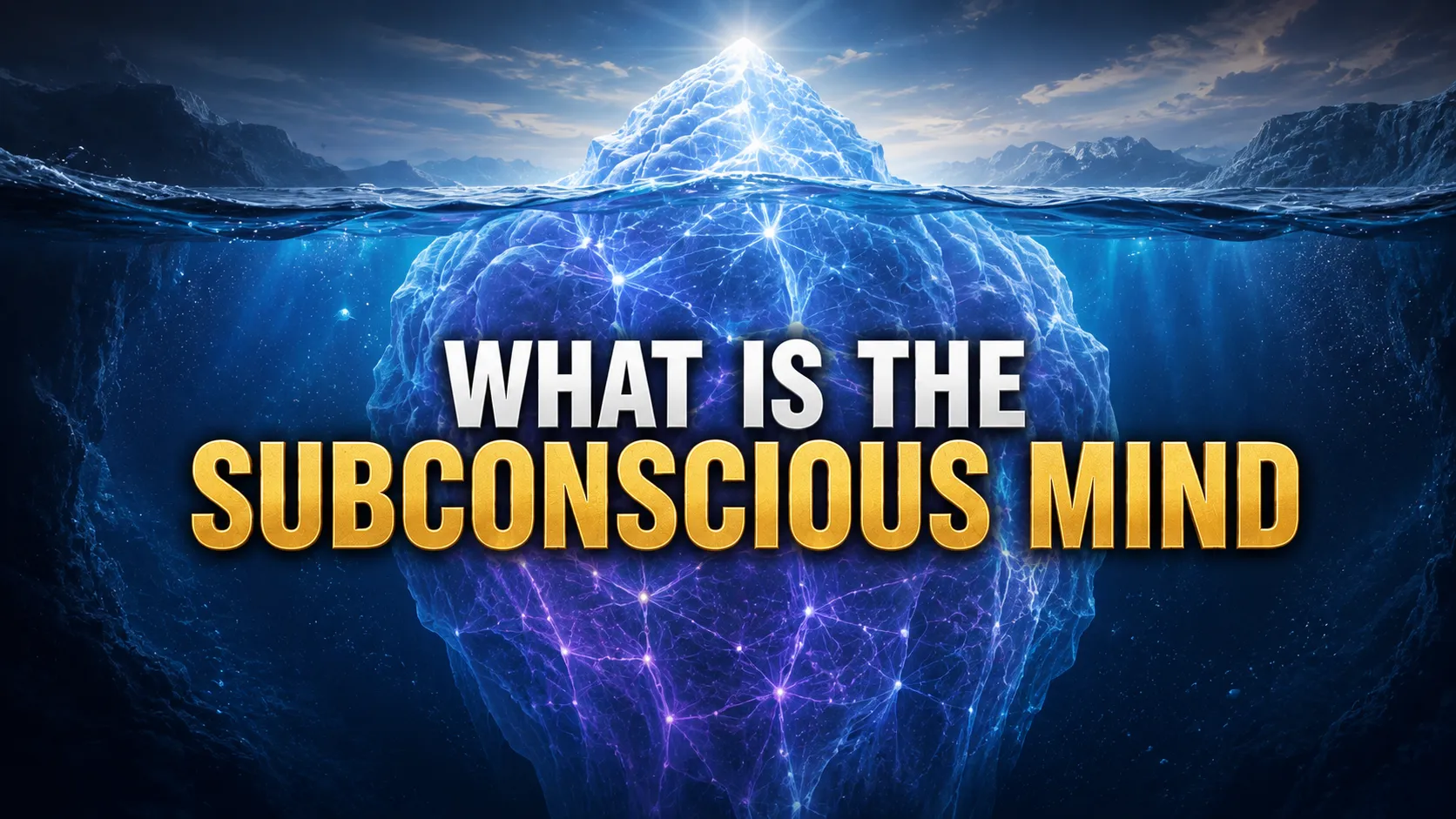
Freud used the term “subconscious” in 1893 to describe associations and impulses not accessible to consciousness, using it interchangeably with “unconscious” in his early writings. He later abandoned the term “subconscious” in favor of “unconscious,” arguing that the former was ambiguous. In his famous iceberg model of the mind, Freud described three layers: the conscious mind (the visible tip), the preconscious (material not currently in awareness but retrievable), and the unconscious (deeply repressed content that actively resists conscious access).
In Freud’s framework, what most people today call the “subconscious” maps more closely to what he called the “preconscious,” the layer of information that is not actively in awareness but can be brought to consciousness with focused attention. The deeper unconscious, in Freud’s model, contains repressed memories and drives that are not easily accessed without specialized methods.
William James and the Stream of Consciousness
American philosopher and psychologist William James, writing in his 1890 landmark work The Principles of Psychology, examined the concept of mental processing below the threshold of conscious awareness and reviewed the work of Janet, Schopenhauer, and others on the subject. James introduced the concept of the “stream of consciousness,” acknowledging that most mental life unfolds beneath the surface of deliberate thought. His work helped legitimize the study of non-conscious mental processes in academic psychology at a time when such ideas were still controversial.
Joseph Murphy and the Modern Popularization
The term subconscious mind entered everyday language significantly through the work of Dr. Joseph Murphy, whose 1963 book The Power of Your Subconscious Mind has sold over 20 million copies and remains one of the most widely read books in personal development history. Murphy, who held a doctorate in divinity and had studied psychology extensively, translated the academic concept of the subconscious into practical, accessible language. He argued that the subconscious mind accepts whatever the conscious mind repeatedly feeds it as true, and acts on that accepted reality without question. His foundational insight, though expressed in non-neuroscientific language, maps closely to what modern neuroplasticity research now confirms.
What Neuroscience Now Tells Us About the Subconscious Mind
Modern brain imaging technology has allowed neuroscientists to observe what was once only theorized. The picture that has emerged over the past three decades is both more complex and more consistent with the intuitions of earlier thinkers than might have been expected.
The 95 Percent Figure: What the Research Actually Shows
You will frequently encounter the claim that the subconscious mind drives 95 percent of human behavior, with the conscious mind responsible for the remaining 5 percent. This figure appears across neuroscience-adjacent writing, and it requires context to understand properly.
The brain processes an estimated 11 million bits of sensory information per second through its various input channels. Conscious awareness can handle roughly 40 to 50 bits per second at most. The rest is processed automatically at the subconscious level without ever reaching conscious awareness. In terms of the ratio of total brain processing to conscious processing, figures in the range of 95 to 99 percent for non-conscious processing are consistent with what brain imaging research indicates.
In behavioral terms, habit and automaticity research has long established that the majority of daily actions, decisions, and responses are driven by established automatic patterns rather than fresh conscious deliberation. When you wake up and follow your morning routine, make familiar food choices, respond to social situations in your characteristic way, or reach for your phone between tasks, almost none of those behaviors involve conscious analysis. They are subconscious programs running on autopilot.
The Default Mode Network: The Brain’s Autopilot
One of the most significant neuroscientific discoveries of the past two decades is the Default Mode Network, a system of interconnected brain regions that becomes active specifically when the conscious mind is not focused on any particular external task. The DMN includes the medial prefrontal cortex, the posterior cingulate cortex, and the angular gyrus, among others.
The DMN governs self-referential thinking, meaning the internal narrative you maintain about who you are, what you deserve, what is possible for you, and how the world treats people like you. It is active during daydreaming, mind-wandering, and any moment of reduced external focus. Research has established that the DMN is where habitual emotional responses, self-concept, and autobiographical memory are processed and reinforced.
When the DMN is hyperactive, meaning it runs these self-referential loops continuously and without interruption, it tends to reinforce established patterns. Limiting beliefs, negative self-concept, and habitual emotional responses are all DMN products. Mindfulness meditation and Reiki healing practices have been documented to reduce DMN hyperactivity, creating space for new patterns to form. This is one of the measurable neurological mechanisms through which inner work produces change.
Neuroplasticity: The Subconscious Mind Can Be Rewritten
For most of the 20th century, the dominant assumption in neuroscience was that the brain’s structure became largely fixed after childhood. The discovery and documentation of neuroplasticity, the brain’s ability to form new neural connections and reorganize its structure throughout life in response to experience, fundamentally changed that understanding.
Every time a thought, emotion, or behavioral pattern is repeated, the neural pathway associated with it is reinforced. The more often a pathway fires, the stronger it becomes and the more automatically it activates. This is the biological mechanism behind habit formation and also behind the persistence of limiting beliefs. The subconscious programs that feel impossible to change are simply heavily reinforced neural pathways. And what can be reinforced can, with the right consistent input, be gradually replaced.
Research from McGill University’s Cognitive Neuroscience Institute and the Greater Good Science Center at UC Berkeley has demonstrated that practices including mindfulness, cognitive reframing, and visualization strengthen emotional regulation circuits in the brain. A 2024 report from the US National Institutes of Health reinforced these findings, showing that cognitive-behavioral and somatic methods enhance emotional self-awareness by targeting the amygdala, the brain’s emotional processing hub.
How the Subconscious Mind Was Programmed: The Critical Window
Understanding how the subconscious mind got its current programming is essential to understanding why it behaves the way it does and what it takes to change it.

The Theta Window: Ages 0 to 7
The brain operates in different electrical frequency states at different times. Beta waves (14 to 40 Hz) characterize normal alert waking consciousness. Alpha waves (8 to 14 Hz) occur during relaxed, meditative, or creative states. Theta waves (4 to 8 Hz) occur during light sleep, deep meditation, and the transitions between waking and sleeping. Delta waves (0.5 to 4 Hz) occur during deep dreamless sleep.
Research on childhood brain development has established that children under approximately seven years of age spend the majority of their waking hours in theta and delta brainwave states. These are the states in which the subconscious mind is most receptive to incoming information, meaning it accepts new input without the filtering, questioning, and evaluation that the conscious adult mind applies.
This is why early childhood experiences have such disproportionate influence on adult psychology. A child watching parents argue about money consistently is not consciously processing the information and deciding “money causes conflict.” The theta-state subconscious is recording the emotional experience and installing a program: “money and conflict belong together.” That program then runs automatically for decades, influencing financial decisions, relationships around money, and emotional responses to financial situations, all without the adult having any conscious awareness that the program exists.
In my practice as a Reiki teacher, I have found that many of the most persistent blocks my students carry trace directly to this early programming window. They are not consciously chosen beliefs. They were installed before the person had the cognitive capacity to evaluate or reject them.
Repeated Experience and Emotional Intensity
After the early childhood window, the subconscious continues to form and reinforce programs through two primary mechanisms: repetition and emotional intensity. Repeated experiences become automatic responses. Highly emotional experiences, whether traumatic or deeply joyful, create strong neural imprints that can influence behavior long after the original experience.
This is also why trauma has such lasting physiological effects. A deeply frightening experience encodes not just a memory but a full-body automatic response pattern in the subconscious. Future situations that carry any resemblance to the original trigger automatically activate the same response, even when the conscious mind knows the current situation is not actually dangerous.
How the Subconscious Mind Shapes Your Daily Reality
The influence of the subconscious mind is not theoretical. It is visible in every area of daily life for anyone who knows what to look for.
Decisions and Choices
Landmark research by neuroscientist Benjamin Libet in the 1980s demonstrated that brain activity associated with a voluntary movement begins several hundred milliseconds before the person consciously decides to make that movement. This finding, replicated and extended by subsequent research, suggests that what we experience as conscious decision-making often occurs after the subconscious has already initiated the process. The conscious mind, in many cases, is not the decision-maker. It is the narrator who explains the decision after it has already been made.
Beliefs and Self-Image
The subconscious mind does not evaluate the truth of its stored beliefs. It simply acts on them. If your subconscious holds the belief “people like me do not become successful,” your behavior will consistently, automatically, unconsciously, align with that belief. You will unconsciously avoid opportunities, unconsciously create conflict that disrupts progress, and unconsciously interpret neutral events as confirmation that the belief is correct. You will experience this as “things just not working out,” with no clear understanding of why.
This is not a character flaw. It is the subconscious running its programming. The solution is not to try harder at the conscious level. The solution is to address the program at the level where it lives.
Physical Health and the Body
The relationship between the subconscious mind and physical health is documented across multiple fields. Chronic stress, which is largely driven by subconscious threat responses rather than actual present danger, has measurable effects on the immune system, cardiovascular function, digestive health, and sleep quality. The amygdala, the brain’s threat-detection center, activates the body’s stress response based on perceived threat, and the subconscious mind is largely responsible for determining what gets perceived as threatening based on past programming.
Research documented at McGill University and supported by the 2024 NIH report referenced earlier shows that targeted practices affecting the amygdala’s response patterns can produce measurable changes in physiological stress markers. Energy healing practices including Reiki, which work with the body’s energy field and directly support parasympathetic nervous system activation, are complementary to this process.
Disclaimer: The information in this article is intended for educational purposes only and does not constitute medical advice. Reiki and energy healing are complementary practices and are not a substitute for professional medical treatment. Always consult a qualified healthcare professional for medical concerns.
Subconscious Mind vs Unconscious Mind: The Important Difference
These two terms are used interchangeably in popular culture, but they have distinct meanings in psychology, and understanding the difference matters practically.
The subconscious mind, as most practitioners and researchers use the term today, refers to mental processes that are outside of current conscious awareness but accessible when attention is directed toward them. Your telephone number is in your subconscious right now. You are not thinking about it, but if asked, you can retrieve it immediately. Habits, beliefs, emotional patterns, and automatic responses are all subconscious in this sense. They can be brought to awareness and, with the right work, changed.
The unconscious mind, in Freud’s original framework and in much of clinical psychology, refers to material that is actively kept out of conscious awareness through psychological defense mechanisms, often because the content is associated with unresolved conflict or overwhelming emotion. Accessing unconscious material typically requires more specialized methods: psychoanalysis, EMDR, somatic therapy, or deep hypnosis.
In practical terms for personal development and energy healing work, the distinction that matters most is this: the subconscious programs you can feel the influence of even when you cannot articulate where they came from are the most workable layer. That is where most meaningful inner work happens.
How to Begin Working with Your Subconscious Mind
Students often ask me where to start. The honest answer is: with awareness first. You cannot change what you have not yet identified. Here is the framework I share in my teaching practice.
Step 1: Identify the Patterns
The subconscious mind makes itself visible through recurring patterns. Look at where the same types of outcomes keep appearing in your life regardless of your conscious intentions. Recurring relationship dynamics. Consistent financial plateaus. Habitual emotional reactions to specific types of situations. These patterns are the subconscious program showing itself. They are not random. They are organized output from a consistent internal program.
Step 2: Locate the Belief Behind the Pattern
Every persistent behavioral pattern has a belief behind it. The belief is usually short, blunt, and uncomfortable to acknowledge: “I am not enough,” “money is dangerous,” “people always leave,” “I do not deserve good things.” Finding the belief requires honest self-inquiry. Journaling, meditation, and energy healing sessions are all tools that support this inquiry by quieting the analytical conscious mind and creating space for subconscious material to surface.
Step 3: Use the Right Tools for the Right Layer
Different tools reach different layers of the mind effectively. Cognitive reframing works well for beliefs held at the level of conscious thought. Affirmations and scripting work through repetition to gradually install new neural pathways at the subconscious level. Hypnosis and theta-state meditation access the subconscious directly during the brain’s most receptive frequency window. Reiki healing works at the energy body level, addressing the energetic imprints of old programs in the chakra system and supporting the nervous system’s capacity to release and receive.
In my own practice, I use Reiki self-healing as the foundation for all subconscious reprogramming work. Before any visualization, affirmation, or meditation session, I spend time in Reiki self-healing to clear the energy body and bring the nervous system out of beta-state alertness into a more receptive state. The quality of the subconscious reprogramming work that follows is consistently deeper and more effective as a result. I have shared this approach in my published Reiki manual, available on Amazon worldwide.
Step 4: Consistency Over Intensity
Neuroplasticity responds to repetition. A single powerful session does not rewire the brain. Consistent daily practice, even if each individual session is brief, produces cumulative results that occasional intense effort does not. Ten minutes of Reiki self-healing and subconscious reprogramming practice every day for ninety days produces more lasting change than one intensive weekend session. This is not a matter of belief. It is how neuroplastic change works mechanically.
Reiki and the Subconscious Mind: The Energy Layer

The subconscious mind does not exist only as neural activity in the brain. Every stored belief, emotional pattern, and automatic response has a corresponding energetic imprint in what Reiki and other energy healing traditions describe as the energy body, the system of chakras and energy pathways that interpenetrates the physical body.
In my years of teaching Reiki globally, the most consistent observation I can share is this: people who do cognitive work alone on their subconscious programs often make slow, effortful progress. People who combine cognitive work with Reiki energy healing consistently report faster, deeper shifts that also feel more stable. The reason, as I understand it from both the spiritual and practical perspectives, is that the energy body clearing removes the energetic charge from the old program, which makes the neural pathway associated with it easier to release and replace.
The Sacral Chakra holds emotional memory. The Solar Plexus Chakra holds subconscious programs around personal power and self-worth. The Heart Chakra holds patterns around love, belonging, and connection. The Root Chakra holds the foundational subconscious beliefs about safety, stability, and basic worthiness. These are not metaphorical descriptions. They are working maps that Reiki practitioners and students use to direct healing energy toward specific areas of subconscious programming with consistent, observable results.
What is the difference between the conscious and subconscious mind?
The conscious mind is the part of mental processing you are actively aware of in any given moment: the thoughts you are deliberately thinking, the decisions you believe you are making, the information you are currently processing. The subconscious mind is everything else: the automatic processing, established habits, stored beliefs, emotional response patterns, and background programs that run continuously without requiring your deliberate attention. Neuroscience estimates that conscious processing accounts for a small fraction of total brain activity, with the remainder happening subconsciously.
Can the subconscious mind be changed?
Yes. The scientific principle of neuroplasticity confirms that the brain continues to form new neural connections throughout life in response to new experiences, consistent repetition, and intentional practice. Subconscious programs can be gradually replaced through methods including consistent affirmation, theta-state meditation and visualization, cognitive behavioral approaches, hypnosis, somatic therapies, and energy healing practices such as Reiki. The key factors are accessing the right level of the mind for the work, and maintaining consistency over time, since neuroplastic change is a cumulative process.
Why does the subconscious mind resist change?
The subconscious mind is not designed to resist change in order to harm you. It is designed to protect you by maintaining the patterns and responses that have historically kept you safe. Even when a subconscious program produces negative outcomes, the subconscious treats familiarity as safety. Change, to the subconscious, registers as unfamiliar and therefore potentially unsafe. This is why people unconsciously self-sabotage outcomes that are consciously desired: the subconscious interprets the new outcome as a threat to established equilibrium. Understanding this removes the shame from self-sabotage and clarifies what the actual work involves.
How does Reiki healing affect the subconscious mind?
Reiki healing works at the level of the body’s energy field, the system of chakras and energy pathways that carry the energetic imprints of beliefs, emotional patterns, and experiences. In my practice as a Reiki Grand Master Teacher, I have consistently observed that Reiki healing sessions support the subconscious reprogramming process in two key ways. First, they support activation of the parasympathetic nervous system, bringing the body out of stress response and into a state where deeper reprogramming is more accessible. Second, they address the energetic charge held in specific chakra centers that corresponds to specific categories of subconscious programming, reducing the energetic reinforcement of old patterns and creating space for new ones to establish.