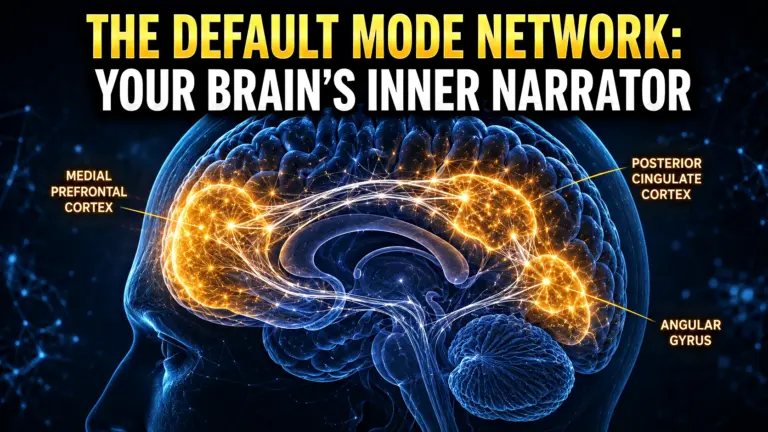


Every night your subconscious mind puts on a show. Not a random one. Not meaningless noise. A highly organized, neurologically precise replay and integration process that reveals, in the only language the subconscious has available during sleep, exactly what it is working on. Most people wake up from their dreams, reach for their phone, and forget everything within ten minutes. They have just slept through the most direct window into their own subconscious that their brain naturally opens each night. The neuroscience of what the brain actually does during dreams is now detailed enough that dismissing dreams as random firing is no longer scientifically defensible. Dreams are the subconscious mind in motion, and knowing how to read them changes what you know about yourself.
This article covers what the latest dream neuroscience confirms about what happens in your brain during dreams, why recurring dreams are a reliable signal of unresolved subconscious content, what specific dream themes consistently point to specific subconscious patterns, and how Reiki healing can change what your subconscious processes during sleep.
Disclaimer: This article is for educational and informational purposes only. Dream interpretation is not a substitute for professional psychological or medical evaluation. If you are experiencing distressing recurring nightmares or sleep disturbances, please consult a qualified healthcare professional. Read our full Disclaimer Page here.
Table of Contents
What Your Subconscious Mind Does During Dreams: The Neuroscience
The scientific understanding of what happens in the brain during dreams has advanced significantly in the past decade. The simple explanation, that dreams are random neural firing during sleep, was never particularly well-supported and has now been substantially replaced by something far more specific and far more interesting.
A 2025 review published in Natural Science of Sleep by researchers at Boston University and Northwestern University described dreams as a by-product of sleep-based memory consolidation, where memory processing happens largely unconsciously while a conscious experience is synthesized from a creative assembly of a subset of those memories. The subconscious is actively processing memories and emotional experiences during sleep, and what surfaces into dream consciousness is a partial, creative representation of that processing.
During REM sleep specifically, a 2024 review published in Trends in Cognitive Sciences by researchers from multiple institutions confirmed that previous waking experiences are often not identically recalled in dreams but incorporated with other past memories into new narratives. The dreaming brain is doing associative work, finding connections between experiences, emotional patterns, and memories that the analytical waking brain keeps separate.
Hyperassociativity: How the Dreaming Brain Connects What the Waking Brain Keeps Separate

One of the most consistently documented features of REM sleep dreaming is hyperassociativity. Research published in Frontiers in Psychology and reviewed in a 2021 editorial on sleep cognition from Bishop Grosseteste University describes hyperassociativity as a defining feature of REM dreaming: the brain makes loose, creative connections between disparate memories, emotions, and concepts that waking analytical thought suppresses or overlooks.
This is why dreams so often feel emotionally resonant but structurally strange. The dreaming subconscious is not bound by the logical sequence requirements that waking thought imposes. It connects your anxiety about a presentation next week to a childhood memory of being criticized in class because, at the emotional pattern level, the subconscious has tagged both as the same kind of experience. The connection reveals something real about how those experiences are stored together in the emotional memory system. It is not a metaphor. It is the associative architecture of how emotional memory actually works.
REM Sleep and Emotional Memory Processing
Matthew Walker’s research at UC Berkeley, documented in his book Why We Sleep and in peer-reviewed papers, established that REM sleep is specifically when the brain strips the emotional charge from difficult memories while preserving the informational content. The hippocampus and amygdala work together during REM to reprocess emotional experiences, often reducing their intensity through repeated processing across multiple sleep cycles.
This is why sleeping on a problem often genuinely helps, and why emotional experiences feel less raw after a full night of sleep. The subconscious has processed them. When this REM emotional processing is consistently disrupted, whether through poor sleep, alcohol, or sleep deprivation, emotional memories retain their full charge rather than being integrated. They surface in waking life with the same intensity as the original experience because the nightly reprocessing that should have reduced that intensity never completed.
For anyone doing inner work on subconscious emotional patterns, this is practically significant. The emotional clearing that happens through Reiki self-healing, expressive writing, or other healing practices is complemented and deepened by the REM processing that follows during sleep. A healing session before sleep that introduces new emotional content and reduces the charge around a specific pattern is not complete when the session ends. The subconscious continues the work through the night.
What Recurring Dreams Are Actually Telling You
Recurring dreams get more attention in dream interpretation guides than almost any other phenomenon, and for good reason. They are the most direct available signal that the subconscious is working on a pattern it has not yet resolved. Understanding why they recur changes how you relate to them.
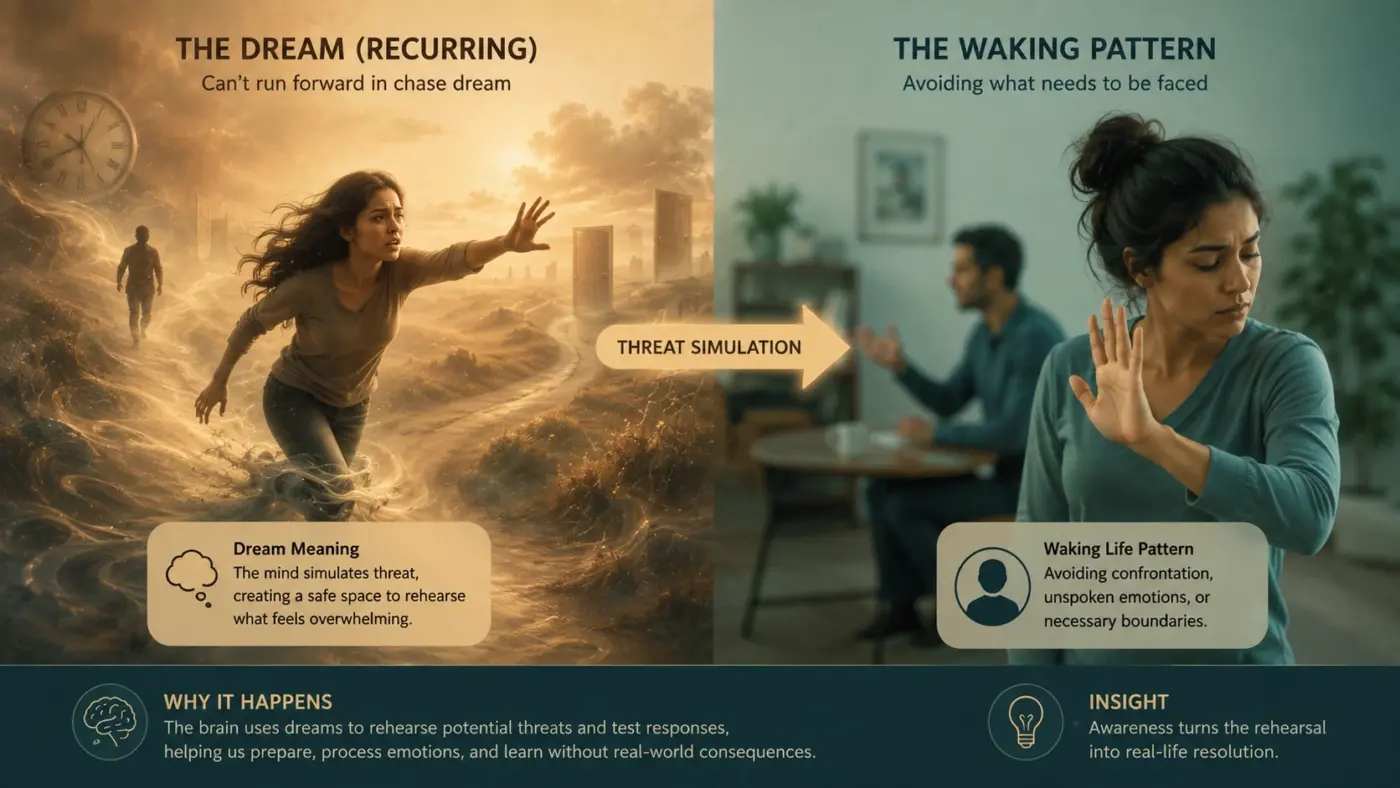
Antti Revonsuo, professor of cognitive neuroscience at the University of Turku and the University of Skövde, proposed the Threat Simulation Theory of dreaming in a landmark 2000 paper in Behavioral and Brain Sciences. Revonsuo argued that the primary biological function of dreaming is threat simulation: the brain uses the dream state to rehearse responses to threatening situations in a safe environment, sharpening the threat-detection and threat-response systems without real-world risk.
Recurring dreams of being chased, falling, or being unable to run fit precisely into this framework. They are not symbolic messages from a mythological unconscious. They are the threat simulation system running on unresolved emotional material that the subconscious has tagged as requiring ongoing rehearsal. The specific scenario does not matter as much as the emotional pattern underlying it. If the pattern resolves in waking life through genuine inner work, the recurring dream typically stops. If it continues, the dream continues because the subconscious is still working on something.
What Common Recurring Dreams Signal About Subconscious Patterns
These connections are based on clinical observation patterns and the emotional architecture of how the subconscious stores and processes experience, not on universal symbolic interpretation systems.
Being chased but unable to run. The most common recurring dream theme in adults. The subconscious is processing an ongoing situation or emotional pattern that the person is avoiding rather than confronting in waking life. The inability to run is particularly significant because it is the dreaming brain’s representation of felt powerlessness, not physical limitation. It typically signals a Solar Plexus-level pattern around personal power and the avoidance of necessary confrontation.
Falling. Very commonly associated with anxiety about loss of control or loss of status. The subconscious is processing uncertainty about security or stability. Often surfaces during periods of life transition when the established sense of groundedness is disrupted. Root Chakra territory in the energy body framework.
Being unprepared for an exam or presentation. The brain is running the threat simulation on performance anxiety and fear of judgment or inadequacy. Common in people whose Solar Plexus and Throat Chakra patterns include chronic self-doubt and fear of exposure. The exam in the dream is rarely about academic performance specifically. It is the subconscious using a familiar scenario to represent the specific emotional pattern.
Teeth falling out. One of the most researched recurring dream themes in clinical dream literature. Associated with anxiety about appearance, communication, and self-expression, particularly about how one presents to others. Often surfaces during periods when the person feels unable to speak their truth or is suppressing authentic expression. Research by Guy Leschziner at Guy’s Hospital in London noted this theme appearing consistently in patients with high levels of social anxiety.
Former relationships or old friends appearing. Not necessarily about missing those specific people. The subconscious uses familiar faces to represent emotional patterns. An ex-partner appearing regularly in dreams often signals that the emotional pattern from that relationship, not the person, remains unresolved and the subconscious is still processing it.
The Threat Simulation Theory and What It Means for Healing
Revonsuo’s Threat Simulation Theory has a direct practical implication that most healing guides have not engaged with. If recurring dreams are the brain running threat simulations on unresolved emotional patterns, then the most effective way to stop a recurring dream is to resolve the underlying pattern, not to analyze the dream symbolically.
Dream journals and symbol interpretation are genuinely useful for identifying which patterns the subconscious is working on. They are not sufficient for resolving those patterns. The resolution happens in waking inner work: Reiki healing on the relevant chakra center, theta-state SATS practice introducing a new felt experience of the resolved situation, expressive writing on the emotional content, and the gradual behavioral changes that update the subconscious prediction around the pattern.
When the resolution happens, the recurring dream changes or stops. This is one of the most reliable observable signals that genuine inner work has reached the subconscious level where the pattern was running. If a dream that has recurred for years suddenly stops after a period of focused inner work on the pattern it represents, that is meaningful data about what the healing has reached.
How to Use Your Dreams as a Subconscious Diagnostic Tool
The most practical application of dream neuroscience for anyone doing subconscious work is using the content and emotional quality of dreams as feedback about what the subconscious is currently processing.
Keep a Dream Journal for Pattern Recognition, Not Symbol Interpretation
The value of a dream journal is not in interpreting individual dream symbols. It is in identifying patterns across multiple dreams over time. What emotional tone recurs most often? What themes appear repeatedly? What relationships or scenarios show up consistently? These patterns reveal what the subconscious is prioritizing for processing, which maps directly onto what inner work is most needed.
Keep the journal brief and focused on emotional content rather than narrative details. The story of the dream is less important than how it felt. Write the dominant emotion first, then the theme, then any specific details that felt charged. Over two to four weeks, patterns become visible that individual dream analysis misses.
Notice What Changes After Inner Work
One of the most useful practices for verifying that inner work is genuinely reaching the subconscious is tracking how dream content changes in response to healing work. When Reiki self-healing consistently targets a specific chakra pattern, when theta-state practice is introducing new material before sleep, or when expressive writing is processing a specific emotional theme, corresponding changes in dream content often follow within days to weeks.
The change is not always dramatic. Sometimes it is as simple as a recurring scenario resolving within the dream rather than ending in the usual way. Sometimes the emotional tone shifts from fearful to curious. Sometimes a dream theme simply stops appearing. All of these are signals worth noticing.
How Reiki Healing Changes What the Subconscious Processes During Sleep

Reiki self-healing before sleep has a direct relationship with what the subconscious processes during the night, and it works through two complementary mechanisms.
The first is emotional priming. As established in the sleep-based reprogramming article on this site, the subconscious prioritizes during sleep what was most emotionally salient at sleep onset. A Reiki self-healing session before sleep introduces specific emotional content, clears the day’s accumulated emotional charge, and sets the energetic tone for the night’s processing. The subconscious then works on the material that the Reiki session introduced and opened, rather than on whatever accumulated stress happened to be loudest at the end of the day.
The second mechanism is the shift in nervous system state that Reiki produces. When the body enters sleep from a parasympathetic, energetically cleared state rather than from sympathetic stress activation, the architecture of the night’s sleep shifts. REM cycles tend to be longer and more complete when the nervous system is not carrying significant physiological stress into sleep. Longer, more complete REM processing means more thorough emotional memory integration, which is directly reflected in the emotional quality and content of dreams.
Students who maintain a consistent pre-sleep Reiki self-healing practice often report changes in their dream content over weeks: fewer anxiety-based threat simulation dreams, more emotionally neutral or even positive dream content, and sometimes vivid dreams with a quality of insight or resolution that feels qualitatively different from standard anxiety dreams. These are not coincidences. They are the observable effects of consistently changed pre-sleep physiological states on the subconscious processing that follows during the night.
Frequently Asked Questions:
What is the subconscious mind doing during dreams?
During dreams, particularly during REM sleep, the subconscious mind is performing several documented functions simultaneously. It is consolidating memories from the day’s waking experience, integrating them with existing memory networks through hippocampal replay. It is processing emotional memories and gradually reducing their emotional charge through the amygdala-hippocampus interaction documented in sleep neuroscience research. It is making hyperassociative connections between experiences, emotional patterns, and concepts that waking analytical thought keeps separate, which is why dream narratives feel emotionally resonant but structurally strange. A 2025 review in Natural Science of Sleep by researchers at Boston University and Northwestern University describes dreaming as a by-product of this largely unconscious consolidation process, where the conscious dream experience is a creative assembly of a subset of the memories being processed.
Why do recurring dreams happen and what do they mean?
Recurring dreams happen because the subconscious is repeatedly working on an unresolved emotional pattern. Antti Revonsuo’s Threat Simulation Theory, published in Behavioral and Brain Sciences, proposes that the brain uses dreaming to rehearse responses to threatening situations in a safe environment. When an emotional pattern remains unresolved in waking life, the subconscious continues to run the threat simulation around it, producing the same dream scenario repeatedly. The specific dream content reflects the emotional pattern, not necessarily a literal situation. Being chased reflects avoidance of necessary confrontation. Falling reflects anxiety about loss of stability or control. Being unprepared for an exam reflects fear of judgment or inadequacy. The recurring dream typically stops when the underlying emotional pattern is genuinely resolved through inner work, not when the dream is analyzed symbolically.
How can you use dreams to understand your subconscious patterns?
The most effective way to use dreams as a subconscious diagnostic tool is through pattern recognition across multiple dreams over time rather than symbolic interpretation of individual dreams. Keeping a brief dream journal focused on emotional tone and recurring themes rather than narrative details reveals patterns across two to four weeks that show what the subconscious is prioritizing for processing. The dominant emotional tone of recurring dreams maps reliably onto the emotional patterns most active in the subconscious. Changes in dream content following deliberate inner work (reduced anxiety dreams, fewer recurring scenarios, resolution within the dream rather than ending in the usual way) are reliable signals that the inner work has genuinely reached the subconscious level where the pattern runs.
Does Reiki healing before sleep change what you dream about?
Reiki self-healing before sleep can influence what the subconscious processes during the night through two mechanisms. First, it affects emotional priming at sleep onset: the subconscious prioritizes for overnight processing what was most emotionally salient when sleep began, so Reiki healing that clears accumulated stress and introduces specific healing intentions sets the emotional agenda for the night’s processing differently than simply falling asleep from a state of unprocessed daily stress. Second, Reiki healing supports parasympathetic nervous system activation that shifts the architecture of sleep toward longer, more complete REM cycles, which produces more thorough emotional memory integration and is reflected in dream content quality and emotional tone. The changes in dream content that follow consistent pre-sleep Reiki practice are gradual and not dramatic, but they are observable over weeks of consistent practice.
What does it mean when the same person keeps appearing in your dreams?
When the same person appears repeatedly in dreams, the subconscious is using that familiar face to represent an emotional pattern rather than the person themselves. The brain selects familiar people as characters for its dream scenarios because they are associated with specific emotional experiences that the subconscious is processing. An ex-partner appearing regularly typically signals that the emotional pattern from that relationship remains active and unresolved in the subconscious, regardless of how fully the person feels they have moved on consciously. A parent appearing repeatedly often represents the specific subconscious programs installed during childhood that the parent’s emotional atmosphere was associated with. The useful question is not “why is this person in my dream” but “what emotional experience or pattern is my subconscious associating with this person, and what does that tell me about what is still unresolved?”
Related Guides
- How to Reprogram Your Subconscious Mind While You Sleep Tonight
- Subconscious Self-Sabotage: Why You Keep Destroying Good Things
- The Default Mode Network: The Brain System That Runs Your Life
- Theta Brainwaves and the Subconscious Mind: The Complete Science
Discover more from Isrg Healing
Subscribe to get the latest posts sent to your email.