

Most people who come to me describing burnout or long term stress do not say their aura feels depleted. They say things like they do not feel like themselves anymore, or that something has shifted in them that ordinary rest does not seem to fix. What they are describing, in my experience, is not just fatigue. It is what happens to the auric field when chronic stress has been present long enough to change the field’s actual structure rather than simply reduce its brightness.
There is an important distinction I want to make at the start of this article. Acute stress, the kind that comes from a difficult week or a specific difficult event, affects the aura temporarily and tends to resolve reasonably well once the stressor passes. Chronic stress, the kind that persists over months or years without adequate recovery, does something different. It gradually alters specific aura layers in ways that outlast the stressor itself. This article is about that second kind, what it does to each layer, how it happens, and what genuinely helps reverse the damage.
Contents of How Chronic Stress Changes Your Aura Layers
How Chronic Stress Differs From Acute Stress in the Aura
The distinction between acute and chronic stress is not just semantic. It represents a genuine physiological difference that has direct consequences for the energy field. When you encounter an acute stressor, your body activates what researchers call the hypothalamic pituitary adrenal axis, releasing cortisol and adrenaline to help you respond to the perceived threat. This response is adaptive. It is meant to be temporary. Once the stressor passes, cortisol levels are supposed to fall, the parasympathetic nervous system takes over, and the body returns to homeostasis.
When stress is chronic, this system never fully deactivates. Research from Harvard Medical School describes this state as similar to a motor idling too high for too long. The HPA axis remains engaged. Cortisol levels stay elevated. The parasympathetic recovery never fully arrives. And according to the General Adaptation Syndrome framework originally described by researcher Hans Selye, the body eventually moves through three distinct stages in response to prolonged stress: an initial alarm reaction, a resistance stage where the body adapts but at significant cost, and finally an exhaustion stage where the adaptive resources run out and genuine systemic damage begins to accumulate.
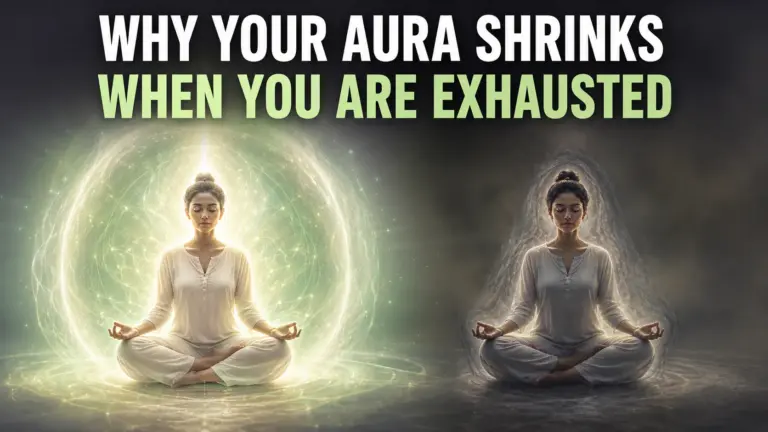
The auric field follows a parallel arc. Short term stress produces temporary contraction. Sustained stress without recovery produces something more like erosion, a gradual wearing down of specific layers that does not simply bounce back once rest is introduced.
What Chronic Stress Does to Each Aura Layer
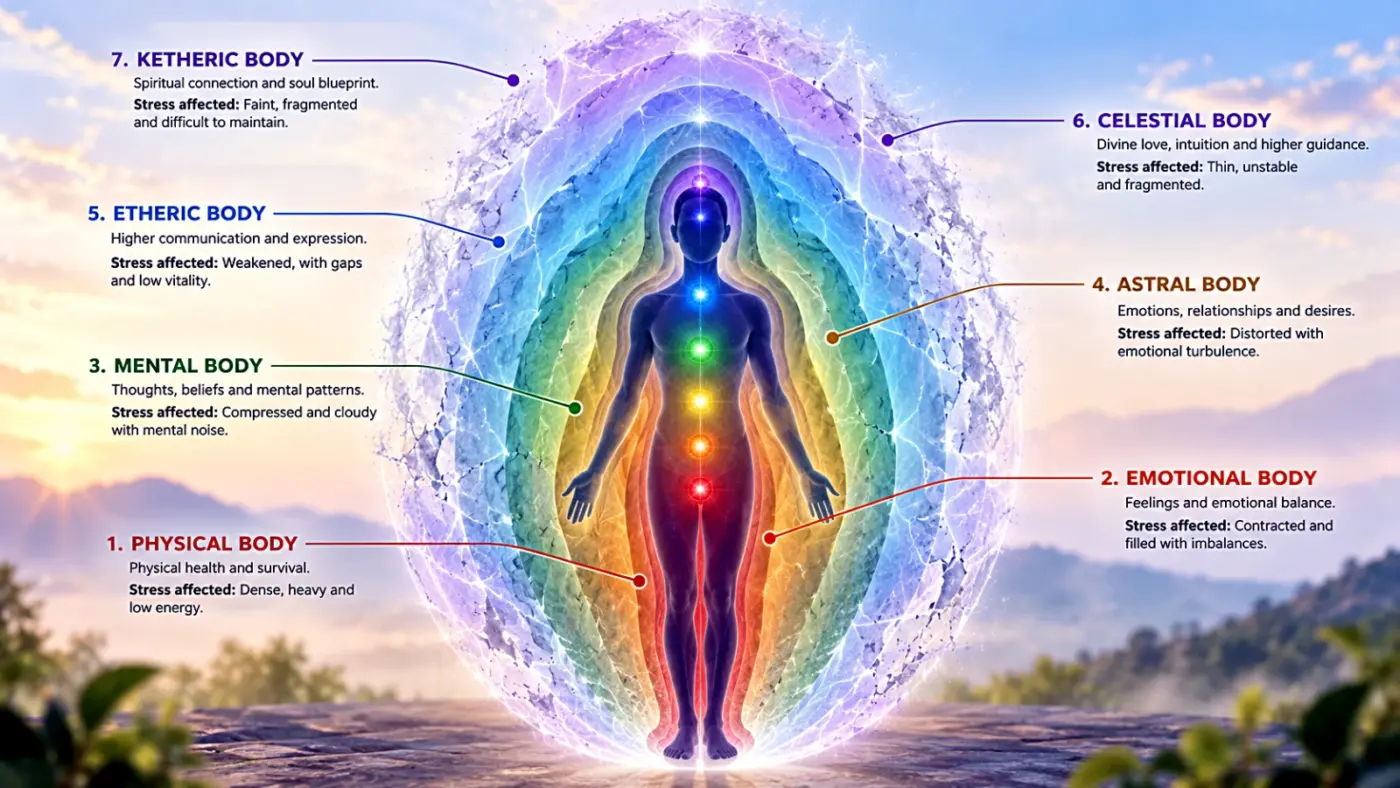
Because the seven aura layers are each connected to a different chakra and a different domain of experience, chronic stress affects them in distinct ways depending on the nature and source of the stress involved.
The Etheric Body
The etheric body, the innermost aura layer connected to the root chakra, reflects the state of the physical body most directly. Chronic stress has a documented physiological effect on nearly every major body system, including the immune system, the digestive system, the cardiovascular system, and bone density through sustained cortisol elevation. Practitioners observing the etheric body during chronic stress often describe it as compressed, grayish, and lacking its normal brightness and definition. Since the etheric body acts as the energetic blueprint of the physical form, these changes tend to mirror the physical depletion that is simultaneously occurring in the body itself.
The Emotional Body
The emotional body, the second auric layer connected to the sacral chakra, tends to show a specific kind of disruption under long term stress that differs from what I see in acute emotional pain. Rather than the gray heaviness associated with grief or heartbreak, chronic stress tends to produce a kind of flattening or dullness in the emotional body, a muted quality that many students describe as feeling emotionally shut down rather than specifically sad. Research confirms this pattern physiologically: prolonged cortisol elevation is associated with anhedonia, the diminished capacity to feel pleasure or positive emotion, which maps closely onto what practitioners observe in this layer.
The Mental Body
The mental body, the third auric layer connected to the solar plexus chakra, is where cognitive stress leaves its most visible mark. Research has documented that chronic cortisol exposure causes measurable atrophy in the hippocampus, the brain region most critical for memory formation and cognitive flexibility. This is not a vague claim. It is a structural brain change confirmed by imaging studies across multiple peer reviewed publications. In the energy field, this kind of sustained mental overload shows up in the mental body as what experienced practitioners describe as a dense, congested quality, as though the layer is carrying more than it can process rather than moving information through cleanly.
The Astral Body
The astral body, the fourth auric layer connected to the heart chakra, tends to show a withdrawal pattern under chronic stress. Rather than extending outward into the social and emotional world as a healthy astral body does, it contracts inward. Students dealing with long term stress frequently describe a growing emotional distance from the people around them, a sense of going through the motions of connection without genuinely feeling present in their relationships. This is not indifference. It is the astral body conserving resources in the same way the physical body does under sustained strain.
The Upper Layers
The three upper layers of the aura, the etheric template, the celestial body, and the ketheric template, tend to lose their cohesion and brightness under prolonged stress rather than showing the specific layer disturbances visible in the lower four. Students in chronic stress often describe a global disconnection from any sense of meaning or spiritual connection, which reflects disruption in these upper layers. The ketheric template, which holds the overall structural integrity of the entire field, is typically the last layer affected and the slowest to recover once restoration begins.
Why the Body Cannot Self Correct Under Chronic Stress
This is the part that I think most stress education misses. The body has genuine self healing mechanisms. It is designed to recover from stress. The reason chronic stress defeats those mechanisms is not that the system is broken. It is that the recovery window is never given enough space to operate.
Sleep is the most important recovery window the body and the energy field have. Research confirms that the body regulates cortisol according to a circadian rhythm governed by the suprachiasmatic nucleus. Healthy cortisol follows a predictable pattern: highest in the early morning, gradually falling through the day, lowest at night. Chronic stress flattens this curve. The evening cortisol drop that is supposed to facilitate sleep and recovery becomes muted, which impairs sleep quality, which in turn keeps the stress system elevated, which further disrupts the cortisol curve. This cycle is one of the clearest mechanisms by which chronic stress becomes self perpetuating rather than naturally resolving.
In the energy field, this cycle shows up as a gradual loss of the natural rhythm of contraction and expansion that a healthy aura maintains through each day and night cycle. Rather than expanding in moments of connection and contracting during rest in a healthy rhythm, the field under chronic stress tends to stay compressed, losing the natural pulsing quality that practitioners associate with a well regulated, resilient energy system.
How Long Does Chronic Stress Take to Damage the Aura
I want to give you an honest answer to this rather than a reassuring one. The timeline varies significantly based on the intensity of the stress, the presence or absence of any recovery practices, and individual differences in energetic resilience. What I can say from years of observation is that temporary auric contraction from acute stress can begin to reverse within days of genuine rest. The more structural changes associated with chronic stress, the kind I have been describing in this article, typically take several months of consistent, intentional practice to meaningfully reverse.
Research on HPA axis recovery after chronic stress also confirms this longer timeline. Studies show that the blunted cortisol pattern associated with prolonged stress does not normalize immediately upon removal of the stressor. The system needs time and consistent support to recalibrate its baseline. The same is true energetically. The aura does not snap back from structural chronic stress damage the moment circumstances improve. It recovers in layers, typically from the innermost outward, over a period of weeks to months depending on the depth of the depletion.
What Genuinely Helps Reverse Chronic Stress Aura Damage

I want to be specific here, because generic stress management advice and genuine auric repair from chronic stress are not the same thing. The following practices address the structural layer changes I have described, not just the surface symptoms.
Restoring the Cortisol Rhythm First
Because so much of the auric damage from chronic stress is downstream of a dysregulated cortisol pattern, the most foundational intervention is to restore a healthy cortisol rhythm. Morning light exposure within thirty minutes of waking, consistent sleep and wake times, and avoiding screens and stimulating content in the final hour before bed are the most research supported interventions for restoring the circadian cortisol pattern. Energy practices built on this foundation work significantly better than energy practices attempted while the cortisol rhythm remains disrupted.
Layer Specific Reiki Work
In my own practice, chronic stress related auric recovery benefits from a systematic approach that works through the affected layers rather than simply providing general energy support. I typically begin with the etheric body and root chakra, addressing the physical depletion that forms the foundation of the problem, before moving to the emotional body, mental body, and astral layer in sequence. Attempting to address the upper layers before the lower layers have been stabilized tends to produce temporary relief that does not hold.
Deliberate Nervous System Downregulation
Because chronic stress keeps the nervous system in a sustained sympathetic state, practices that specifically activate the parasympathetic branch are more targeted than general relaxation. Slow, extended exhale breathing (exhaling for longer than the inhale), cold water face immersion, and humming or chanting all directly stimulate the vagus nerve, the nerve most responsible for shifting the body into its parasympathetic rest and digest state. These are not passive relaxation techniques. They are active physiological interventions with documented effects on the nervous system that directly support the energetic recovery process.
Disclaimer: The information in this article is intended for educational purposes only and does not constitute medical advice. Reiki and energy healing are complementary practices and are not a substitute for professional medical treatment. If you are experiencing symptoms of burnout, chronic fatigue, or persistent mental health difficulties, please consult a qualified healthcare professional.
Frequently Asked Questions
Does chronic stress permanently damage the aura
Not permanently, but the structural changes chronic stress produces in specific aura layers take significantly longer to reverse than temporary depletion from acute stress. Recovery typically requires months of consistent, intentional practice rather than simple rest.
Which aura layer is most damaged by chronic stress
The specific layer most affected depends on the type of stress involved. Physical overwork primarily affects the etheric body. Emotional strain affects the emotional body. Cognitive overload and decision fatigue affect the mental body. All layers are typically affected to some degree in prolonged chronic stress.
What is the fastest way to begin repairing a stress damaged aura
Restoring a healthy cortisol rhythm through consistent sleep timing and morning light exposure is the most foundational first step, since most of the auric damage from chronic stress is downstream of a dysregulated cortisol pattern. Energy work built on this foundation produces significantly better and more lasting results.
Why does rest alone not fix a chronically stressed aura
Because chronic stress produces structural changes in the energy field that go beyond simple depletion, passive rest creates the conditions for recovery but does not actively reverse the layer specific disruptions that have accumulated. Active, targeted practices are needed alongside genuine rest.
Related Guides
- How Your Aura Changes During Meditation: A Practitioner View
- What Your Aura Looks Like After a Breakup and How to Heal It
- Why Your Aura Shrinks When Exhausted and How to Rebuild It
- What Is Aura: Complete Guide to Your Energy Field Layers
Discover more from Isrg Healing
Subscribe to get the latest posts sent to your email.