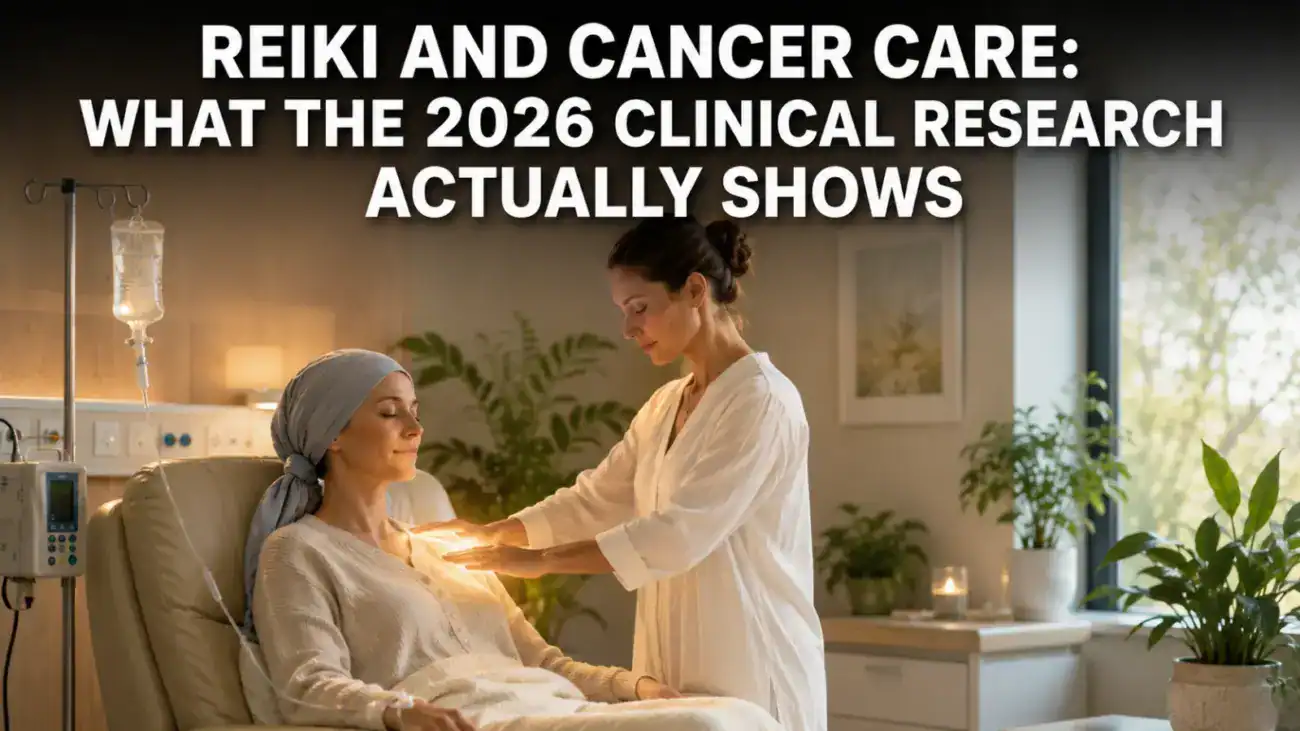
When a cancer diagnosis arrives, it reorganizes everything. The treatment plan, the daily schedule, the emotional landscape of an entire family. What does not get enough attention is the accumulating burden of treatment itself: the nausea that follows every infusion, the fatigue so deep it does not lift with sleep, the anxiety that no prescription fully quiets. These are the symptoms that people living with cancer carry between appointments, and they are precisely where a growing body of peer-reviewed clinical research shows Reiki making a measurable difference. This is not a collection of testimonials. This is a report on what the science actually found, study by study, number by number, with full source citations, as of 2026.
Contents Reiki and Cancer Care
Why Cancer Patients Are Turning to Reiki in 2026
The question of whether Reiki belongs in cancer care used to be considered fringe. That conversation has changed decisively. A 2026 chapter published in Comprehensive Integrative Oncology documents that biofield therapies including Reiki now have rising acceptance and availability within cancer services in mainstream medicine, with positive outcomes extensively reported across the research literature.
This shift is not driven by belief. It is driven by the practical reality that cancer treatment produces a specific cluster of suffering that pharmaceutical interventions do not fully address. Chemotherapy-related nausea can be reduced with medication but rarely eliminated. Cancer-related fatigue, which affects up to 90 percent of patients in active treatment, has no approved drug that reliably resolves it. Pre-procedural anxiety spikes before every infusion, every scan, every surgical preparation. These are the gaps where Reiki, administered alongside standard medical care, is showing clinically significant results.
In my practice working with students and practitioners who support cancer patients, I have watched this shift happen in real time. The families who come to learn Reiki are not rejecting medicine. They are looking for something that medicine is not providing: a way to be present, to offer tangible comfort, and to support healing at a level that a chemotherapy drip cannot reach.
Disclaimer: The information in this article is intended for educational purposes only and does not constitute medical advice. Reiki and energy healing are complementary practices and are not a substitute for professional medical treatment. Always consult a qualified healthcare professional for medical concerns.
Study 1: The University Hospitals Cleveland Trial (Published 2025)
The most detailed real-world Reiki study in cancer care published in the past two years comes from University Hospitals Connor Whole Health in Cleveland, Ohio. The study, titled Evaluation of a Reiki Volunteer Program within Two Cancer Infusion Centers, was published in the Journal of Pain and Symptom Management (Volume 69, Issue 3, March 2025, DOI: 10.1016/j.jpainsymman.2024.11.017).
What They Did
This was a two-year retrospective review covering the period from March 2022 to February 2024. Researchers evaluated the outcomes of a volunteer Reiki program operating at two University Hospitals infusion centers, one at UH Cleveland Medical Center and one at Portage Medical Center. A total of 392 Reiki sessions were administered to 268 unique patients. The mean patient age was 63.3 years. The patient population was 57.5 percent female, with 71.6 percent White and 26.5 percent Black or African American participants. Of those enrolled, 89.2 percent carried an oncology diagnosis. The remaining patients were receiving infusions for other chronic illnesses including autoimmune conditions.
The sessions lasted 15 to 20 minutes and were administered by trained Reiki volunteer practitioners during the patients’ active infusion treatment, meaning patients were receiving chemotherapy or other intravenous therapies simultaneously. Symptom levels were measured using the Edmonton Symptom Assessment System (ESAS) before and after each session.
What They Found
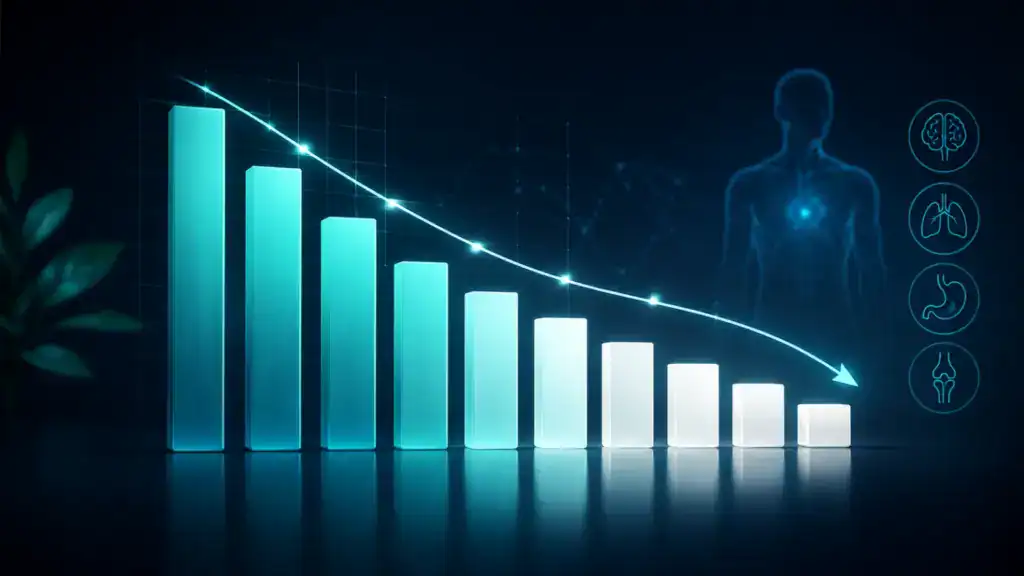
The results, measured on a standard 0 to 10 scale, showed clinically significant improvements across every symptom category measured. A clinically significant improvement in this context is defined as a change of 1.0 units or greater on the ESAS scale.
| Symptom | Mean Improvement | 95% Confidence Interval |
|---|---|---|
| Nausea | -2.30 | [-2.95, -1.62] |
| Anxiety | -2.09 | [-2.68, -1.50] |
| Pain | -1.78 | [-2.38, -1.18] |
| Wellbeing | +1.37 | [0.95, 1.79] |
| Fatigue | -1.33 | [-1.85, -0.82] |
Every single improvement crossed the threshold for clinical significance. The most substantial single-session effect was on nausea, which reduced by an average of 2.30 units. This is particularly notable because, as the researchers acknowledged, no prior study had specifically assessed changes in nausea following Reiki received during active infusion treatments. This study filled that gap directly.
The qualitative responses from patients were equally telling. Recorded comments included: “It really relaxed me and helped lessen my pain.” And: “This was my first time trying it but I think it actually worked.” And: “Very positive energy from the experience. It was a great impact on my mood.” The research team, led by Natalie Dyer of Connor Whole Health, concluded that outpatients receiving Reiki during infusion reported clinically significant improvements in all symptoms, high levels of satisfaction, and a qualitatively positive healing experience.
Study 2: The Triple-Arm Randomized Controlled Trial, Ege University (2025)
A rigorous three-armed, double-blinded, randomized follow-up trial was conducted at Ege University Hospital in Izmir, Turkey, and published in Seminars in Oncology Nursing (April 2025, Volume 41, Issue 2, DOI: 10.1016/j.soncn.2024.151807). The researchers were Sevcan Oz Kahveci, Esra Engin, and Erdem Goker.
Study Design
58 cancer patients were enrolled and randomly assigned to one of three groups: an experimental group receiving genuine Reiki, a placebo group receiving Sham Reiki (where an untrained person mimicked hand positions without energy intention), and a control group receiving Progressive Relaxation Exercise. Data was collected at four time points: pre-test, 4th-day follow-up, 21st-day follow-up, and 3-month follow-up. Outcome measures included the Visual Analog Scale for pain, the State-Trait Anxiety Inventory, and the Perceived Stress Scale.
What They Found
In the within-group time comparison, both the genuine Reiki group and the Progressive Relaxation Exercise group showed significant decreases in pain and anxiety over time compared to the pre-test baseline. Critically, the most significant decrease in both pain and anxiety occurred in the genuine Reiki group, outperforming both the sham Reiki placebo and the standard relaxation control. The Perceived Stress Scale scores also showed a significant interaction effect, with the Reiki group demonstrating the strongest response. The study also measured cortisol levels as an objective biological marker of stress. While no significant difference in cortisol levels was found between groups, the behavioural and self-reported outcomes consistently favoured genuine Reiki.
The importance of the three-arm design cannot be overstated. By including a sham Reiki group, the researchers directly controlled for the placebo effect of human attention and touch. The fact that genuine Reiki outperformed sham Reiki is a meaningful scientific distinction.
Study 3: Integrative Reiki Program Evaluation at a Major Oncology Center
A program evaluation published in the research literature examined 213 first-time Reiki sessions in an academic medical oncology center. Using a modified version of the distress thermometer, researchers measured distress, anxiety, depression, pain, and fatigue before and after each session. The results reported were among the most striking in the published literature on Reiki and cancer care.
Participants experienced a greater than 50 percent decrease across every measured symptom category in a single session:
- Distress: reduced from a mean of 3.80 to 1.55
- Anxiety: reduced from 4.05 to 1.44
- Depression: reduced from 2.54 to 1.10
- Pain: reduced from 2.58 to 1.21
- Fatigue: reduced from 4.80 to 2.30
All reductions were statistically significant (p less than 0.001). The fact that fatigue, widely considered the most treatment-resistant symptom in oncology, dropped by more than half in a single session is a finding that has attracted considerable attention within the integrative medicine research community.
Study 4: Acupressure or Reiki in Palliative Cancer Care (Journal of Integrative and Complementary Medicine, 2025)
A randomized controlled trial published in the Journal of Integrative and Complementary Medicine in 2025 examined the effect of acupressure or Reiki on pain and fatigue in 156 cancer patients at stage III and IV receiving palliative care. The study registration number is NCT05473845.
The findings confirmed that both acupressure and Reiki interventions were effective in reducing pain (p less than 0.001) and fatigue (p less than 0.001) in patients with late-stage cancer. The researchers concluded that in addition to their use in routine nursing care, both treatments can be accepted as effective nursing interventions in cancer palliative care settings.
The significance of this study is its population: stage III and IV cancer patients in palliative care represent the most medically complex and symptom-burdened group in oncology. The fact that Reiki produced statistically significant improvements in this population carries considerable weight.
Study 5: The 2025 Quality of Life Meta-Analysis
A systematic review and meta-analysis published in March 2025 in the journal Systematic Reviews (Liu et al., 2025, DOI: 10.1186/s13643-025-02811-5) pooled data from randomized controlled trials involving 661 participants aged 14 years and above across diverse patient populations including cancer patients, surgical patients, and individuals with chronic illnesses.
The analysis found a statistically significant improvement in quality of life following Reiki therapy, with a standardised mean difference of 0.28 (95% CI 0.01 to 0.56, p = 0.043). Subgroup analysis revealed that the strongest quality of life improvements occurred in sessions with a frequency of 8 or more sessions and a duration of 60 minutes or more. Acute sessions of 20 minutes or fewer also produced measurable improvements, which is particularly relevant to the chemotherapy infusion setting studied by the University Hospitals Cleveland team.
Reiki for Cancer Family Caregivers: A Study Most People Have Never Heard Of

One of the most overlooked areas in cancer care research is the wellbeing of the people who care for cancer patients. Family caregivers experience measurable levels of anxiety, depression, and physical exhaustion that frequently go unaddressed. A randomized controlled trial published in Complementary Therapies in Medicine investigated the effect of Reiki on the stress levels of primary caregivers caring for cancer patients.
Caregivers were randomized to either a genuine Reiki group or a sham Reiki group. The Reiki group received sessions targeting all seven primary chakra regions once a week for six weeks. Post-intervention Caregiver Strain Index scores declined significantly in the Reiki group compared to the sham group (p less than 0.05). All caregivers in the Reiki group stated that they found the caregiving process less stressful following the sessions. No adverse effects were reported by any participant.
Students often ask me whether they can use Reiki to support a family member going through cancer treatment. My answer is always yes, and this study gives that answer a specific scientific foundation. The healing is not only for the patient. The caregiver needs support too, and Reiki is one of the few complementary practices that has been formally researched in that role.
Which Hospitals Are Now Offering Reiki to Cancer Patients
The presence of Reiki in major cancer centers is no longer a curiosity. It is policy. A 2025 study published in SAGE Open Medicine (PMC11873885) documented that more than 800 hospitals, representing approximately 15 percent of all hospitals in the United States, now offer Reiki as part of their patient care services. Among the institutions offering Reiki within their integrative oncology programs are:
- Memorial Sloan Kettering Cancer Center, New York – Ranked the number one cancer hospital in the Northeast and consistently in the top two nationally by U.S. News and World Report, MSK’s Bendheim Integrative Medicine Center offers Reiki to patients experiencing anxiety and nausea as part of its customized integrative care approach.
- University Hospitals Connor Whole Health, Cleveland – The institution that conducted the 2025 infusion center study, with a formal volunteer Reiki program running continuously since at least 2022.
- Brigham and Women’s Hospital, Boston – One of the longest-running hospital Reiki programs in the United States, with over 60 volunteer Reiki practitioners on staff who have collectively provided more than 40,000 sessions to patients, family members, and hospital staff.
- Yale New Haven Hospital, Connecticut – Offers Reiki as part of its integrative cardiology and oncology services.
- M.D. Anderson Cancer Center, Houston – One of the world’s leading cancer treatment institutions, offering complementary therapies including biofield therapies as part of its integrative medicine program.
The inclusion of Reiki at these institutions is significant not because these hospitals are known for alternative medicine. They are known for evidence-based medicine at the highest level. Their decision to include Reiki is an institutional acknowledgment that the research has reached a threshold they are willing to act on clinically.
What the Research Does Not Claim
Integrity in reporting this research requires stating clearly what it does not show. No peer-reviewed study has demonstrated that Reiki shrinks tumors, extends survival, or replaces any component of standard cancer treatment. The research evidence supports Reiki as a complementary intervention that reduces the symptom burden of cancer and its treatment. It does not position Reiki as a cure or as a primary treatment for any cancer diagnosis.
The mechanism by which Reiki produces its effects is not yet established in the scientific literature. Researchers have proposed several frameworks including biofield interactions, the relaxation response and its downstream physiological effects, autonomic nervous system modulation, and non-local consciousness research. None of these frameworks is currently definitive. The honest position is that the effects are consistently observed and replicated across multiple research groups in multiple countries, while the precise mechanism remains under active investigation.
I have always been direct with students and clients about this distinction. Reiki is not a replacement for surgery, chemotherapy, radiation, or immunotherapy. It is what fills the space between treatments. It is what addresses the layer of suffering that oncology appointments do not have the time or the tools to reach.
How Reiki Is Delivered in Cancer Care Settings
In clinical settings, Reiki for cancer patients is typically delivered in one of three formats.
Chairside or Bedside During Treatment
As demonstrated in the University Hospitals Cleveland study, Reiki can be administered while a patient is actively receiving an infusion. The practitioner works with hands placed gently on the shoulders, arms, or head, or held slightly above the body, for 15 to 20 minutes. The patient remains in the infusion chair, fully clothed, with no interruption to the medical treatment in progress. This is the most practical format for hospital integration and the one producing the most consistent documented results.
Scheduled Individual Sessions
Patients receive a dedicated Reiki session in a treatment room, typically lasting 45 to 60 minutes, before or after a medical appointment. This format allows for a more complete treatment addressing the full energetic field rather than focusing primarily on symptom relief during a medical procedure. The evidence base for this format includes the positive outcomes in the quality of life meta-analysis, which found strongest results in sessions of 60 minutes or more.
Distance Reiki
For patients who are too ill to attend appointments, who live at a distance from a Reiki practitioner, or who are in home hospice care, distance Reiki using the Hon Sha Ze Sho Nen symbol provides access to the same healing energy without requiring physical presence. Recipients of scheduled distance sessions report symptom experiences consistent with in-person sessions. This format is widely used in our own practice at ISRG Healing and has been consistently effective with patients who cannot leave their homes during active treatment.
What to Look for When Choosing a Reiki Practitioner for Cancer Support
The quality and training of the Reiki practitioner matters. The research showing positive outcomes was conducted with trained practitioners who could verify their lineage and had received formal attunements through a recognized Reiki system. Choosing a practitioner for cancer care involves several practical considerations.
First, confirm their lineage. A qualified Reiki practitioner should be able to trace their training back through a named lineage to Mikao Usui, the founder of the Usui Reiki system. Second, confirm their level. Level 2 or above is appropriate for working with seriously ill individuals, as the additional symbols provide greater precision and depth. Third, ask whether they have experience working with cancer patients specifically. The energetic needs of someone in active chemotherapy are different from those of a person managing general stress, and an experienced practitioner will adapt accordingly.
Fourth, and most important: Reiki should always be offered as a complement to the patient’s existing medical care. A reputable Reiki practitioner will never suggest that sessions should replace or reduce conventional cancer treatment. If a practitioner implies otherwise, that is a serious warning sign.
Related Guides
- What Is Reiki and How Does It Actually Work Complete Guide in 2026
- Reiki Level 1 2 and 3 What No One Tells You About Each Attunement
Discover more from Isrg Healing
Subscribe to get the latest posts sent to your email.
